Dateline Report
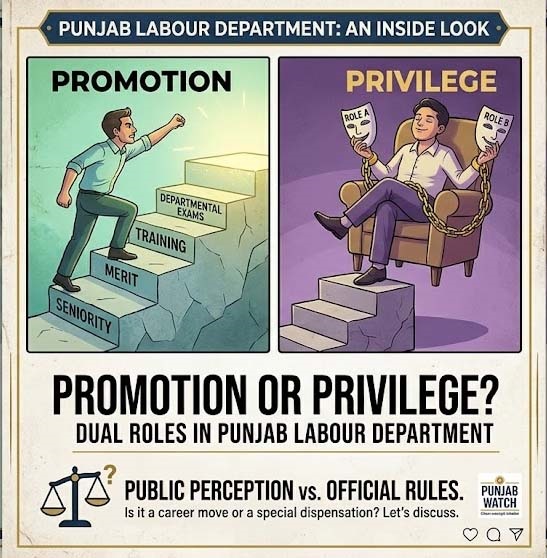
ISLAMABAD : A routine administrative order in Punjab’s Labour Department has sparked sharp criticism over transparency and fairness. The Directorate General Labour Welfare Punjab recently promoted Abdul Shakoor from Labour Inspector (BS-14) to Labour Officer (BS-16) on the recommendation of the Departmental Promotion Committee. While the promotion itself follows procedure, controversy stems from the decision to let him retain additional charge of his previous post—Labour Inspector-IV—in Rawalpindi’s Commercial Market, a zone widely regarded as financially lucrative due to its direct interface with businesses and compliance inspections. Since his induction in this development as a clerk, he had been serving at the same location purportedly due to political backing and”Yes Man” performance.
Analysts argue that allowing a BS-16 officer to continue holding a BS-14 field post distorts hierarchy, creates overlapping authority, and potentially concentrates both policy-level and ground-level power in one individual. Department insiders note that other officers promoted under similar circumstances were not granted such dual roles, fueling allegations of favoritism. A senior official, speaking anonymously, said promotions are meant to elevate responsibility, not preserve old field positions.The unusual arrangement has intensified speculation of political patronage. Retired bureaucrats suggest such exceptions rarely occur without external influence, pointing to the possibility of political backing behind the decision. Governance experts warn that this practice undermines merit-based postings, weakens institutional discipline, and risks conflicts of interest in regulatory enforcement.The larger concern is whether this is an isolated case or evidence of a systemic flaw where influence overrides rules. Until the Labour Department explains the rationale, the episode stands as a telling example of how unchecked discretion can erode accountability and fairness in public administration.