Editor Report
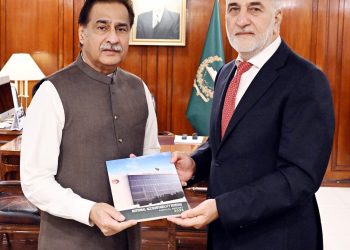
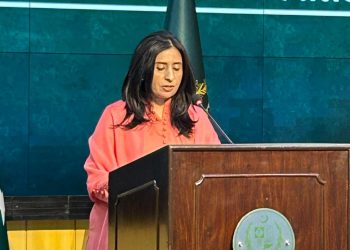
ISLAMABAD:Transparency International Pakistan has released its NCPS 2025 survey, revealing a significant decline in the perceived impact of corruption nationwide.The report highlights increased transparency, improved economic sentiment, and growing public demand for stricter political and institutional accountability.According to Transparency International Pakistan, 66% of Pakistanis said they did not pay any bribe for government services over the last 12 months — one of the strongest indicators of perceived progress.The NCPS, which measures public perception rather than the actual rate of corruption, shows that transparency and service delivery have improved across several key sectors.
Public perception of corruption has declined noticeably, with the report describing it as a “significant decrease in the impact of corruption.”
Economy stabilising after IMF deal, FATF grey list removal
A majority — 60% of respondents — believe Pakistan’s economy has become more stable due to the striking of IMF agreement and exiting the FATF grey list. The report notes that the economy is moving “from stagnation to stability and from stability to growth.”
When asked about purchasing power, 43% reported an improvement, while 57% said it had declined, reflecting mixed but cautiously improving public sentiment.
Corruption perception by sector
Despite overall progress, the police remain at the top of the list for perceived corruption. Tender and procurement ranked second, the judiciary third, the power and energy sector fourth, and the health sector fifth.
However, Transparency International Pakistan noted a 6% positive shift in public opinion about the police, describing the improvement as meaningful — especially since the 2025 survey sampled 4,000 participants, up from 1,600 in 2023. This improvement was attributed to better police behaviour and enhanced service delivery under institutional reforms.
Public perceptions also improved in education, land and property, local government, and taxation.
Demand for stronger accountability, transparency
The survey highlights strong public support for measures aimed at combating corruption:
- 83% of respondents want a complete ban or strict regulation on business funding for political parties.
- 51% say that tax-exempt institutions — NGOs, hospitals, laboratories, and educational institutions — should not charge fees from the public.
- 53% want tax-exempt welfare institutions to publicly disclose donor names and donation details.
- 42% favour stronger whistleblower protection laws.
- 70% say they are unaware of any government corruption reporting system, underscoring the need for better public awareness tools.
Respondents identified the top causes of corruption as lack of transparency, limited access to information, and delays in corruption case decisions.
Another notable finding: 59% believe provincial governments are more corrupt than other levels of governance.
The NCPS 2025 survey was conducted from September 22 to 29, 2025, with 4,000 participants from across Pakistan. This represents a substantial increase compared to 2023’s sample size of 1,600. Demographics included:
- 55% men, 43% women, 2% transgender respondents
- 59% urban, 41% rural participants
Transparency International emphasized that the NCPS gauges perception, not actual corruption levels, offering insight into public experience and confidence in institutions.