Staff Reporter
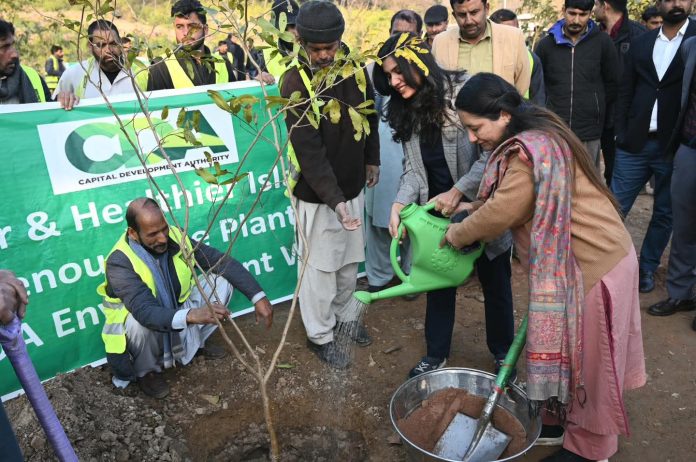
ISLAMABAD: Islamabad has witnessed a significant reduction in pollen allergy cases following a comprehensive, science-based initiative launched by the federal government to address one of the capital’s most persistent public health challenges.Under the directives of the Prime Minister, a detailed roadmap to combat pollen allergy was developed under the supervision of Minister of State for National Health Services Dr. Mukhtar Ahmad Malik, with coordinated implementation by the Capital Development Authority (CDA) and the Ministry of National Health Services.According to official data available with APP, more than 29,000 allergenic Paper Mulberry trees—identified as the primary source of pollen allergies in Islamabad—have been systematically removed through a three-phase, scientifically planned operation.When contacted CDA spokesperson clarified that the initiative exclusively targeted Paper Mulberry trees, while all indigenous and non-allergenic species were preserved.He said the operation was carried out after proper mapping, marking, and formal approvals, with implementation overseen by CDA’s Environment Wing.The Security Directorate monitored the process to ensure transparency and strict compliance with environmental protocols.Responding to public concerns, CDA Deputy Director General Environment Sania Pasha dismissed reports suggesting that trees were cut without planning, emphasizing that all removals followed documented procedures.Major pollen-affected areas, including F-9 Park, Shakarparian, and several large residential sectors, were prioritized due to their historically high pollen concentration.In Shakarparian alone, she said restoration work is currently underway across 81 acres, with completion targeted by April 2026.To maintain ecological balance, Pasha maintained that the government adopted a 3:1 replacement policy, under which three local, non-allergenic trees are planted for every tree removed.