By Naveed Ahmad
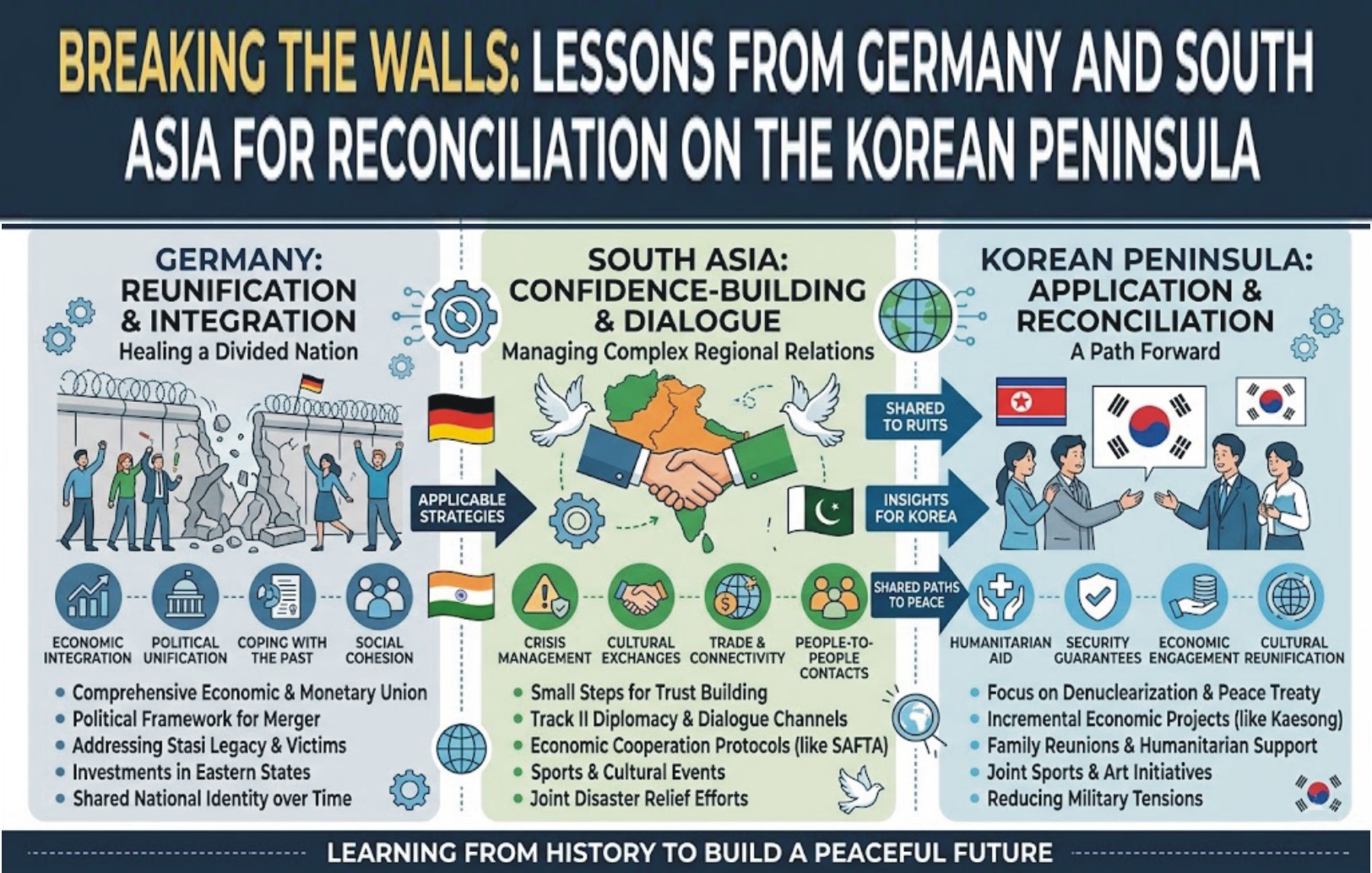
After the Second World War, the world split into two powerful blocs. On one side stood the United States; on the other, the Soviet Union. As a consequence of the Cold War, Germany itself was divided into two states: East Germany and West Germany. East Germany fell under Soviet influence, while West Germany aligned with the United States and its Western allies.
The city of Berlin was also partitioned, and in 1961 the infamous Berlin Wall was erected, physically and symbolically separating families, relatives, and friends.
Although both sides spoke the same German language, shared a common culture, and maintained deep social bonds, political division created profound social distance. For decades, families were unable to reunite. Finally, in 1989, the Berlin Wall came down, paving the way for normalized relations between the two German states. This historic development not only restored human connections but also strengthened economic stability and social cohesion.
A similar episode unfolded in South Asia. In 1971, East Pakistan separated and emerged as Bangladesh, with Dhaka as its capital. Initially, relations between the two countries remained strained, and at various political junctures, harsh rhetoric and mutual distrust prevailed. Many families, including Bihari Pakistanis residing in Bangladesh, were deeply affected by the division.
Over time, however, circumstances evolved, and relations between Pakistan and Bangladesh gradually improved. Today, both nations maintain their distinct identities while moving toward greater cooperation and engagement.
In light of these historical examples, the situation on the Korean Peninsula presents striking parallels. North Korea and South Korea were likewise divided amid Cold War tensions. The North aligned closely with China and the former Soviet bloc, while the South forged ties with the United States and Western allies. Despite this political divide, both sides share a common language, culture, and historical heritage. Countless families remain separated across the border, unable to meet due to ongoing political tensions and restrictions.
The question, therefore, is compelling: as the world changes, walls fall, and old hostilities give way to reconciliation, should the people of Korea not also be granted the freedom of human contact, family reunions, personal visits, and the restoration of social bonds? National identity and political sovereignty can remain intact, as demonstrated by the cases of Germany and Bangladesh. Yet restricting human relationships cannot serve as a lasting solution.
Leaders of North Korea and South Korea should take gradual but meaningful steps toward easing tensions and restoring human connections across the divide. Without compromising their political systems or sovereignty, both governments can expand family reunions, allow limited humanitarian travel, revive joint economic initiatives such as the Kaesong Industrial Complex, and strengthen military communication channels to prevent misunderstandings. Cultural, academic, and people-to-people exchanges should also be encouraged to rebuild trust rooted in their shared language and heritage. History, particularly the fall of the Berlin Wall, demonstrates that reconciliation begins with human contact and confidence-building measures. By prioritizing compassion over confrontation, both sides can gradually “break the walls” of hostility while maintaining their separate identities, laying the foundation for lasting peace on the Korean Peninsula.
It is thus imperative that North and South Korea, while preserving their separate identities, adopt greater humanitarian flexibility, ease restrictions, facilitate family reunions, and allow people-to-people contact. In a transforming world, mutual respect, engagement, and human compassion remain the most enduring foundations for peace.